5 Mistakes Gilbert Homeowners Make After a Flood
What you do in the first few hours after flooding determines whether your home recovers cleanly or ends up with a mold problem six weeks later.
(928) 393-8922Request Emergency Help
Quick Answer
After a flood in your Gilbert home: do not use household fans to dry the space, do not discard damaged materials before your adjuster documents them, do not assume surface-dry means structurally dry, do not delay calling your insurer, and do not treat monsoon surface flooding as covered under a standard homeowners policy. Standard policies cover sudden internal water damage, not external floodwater.
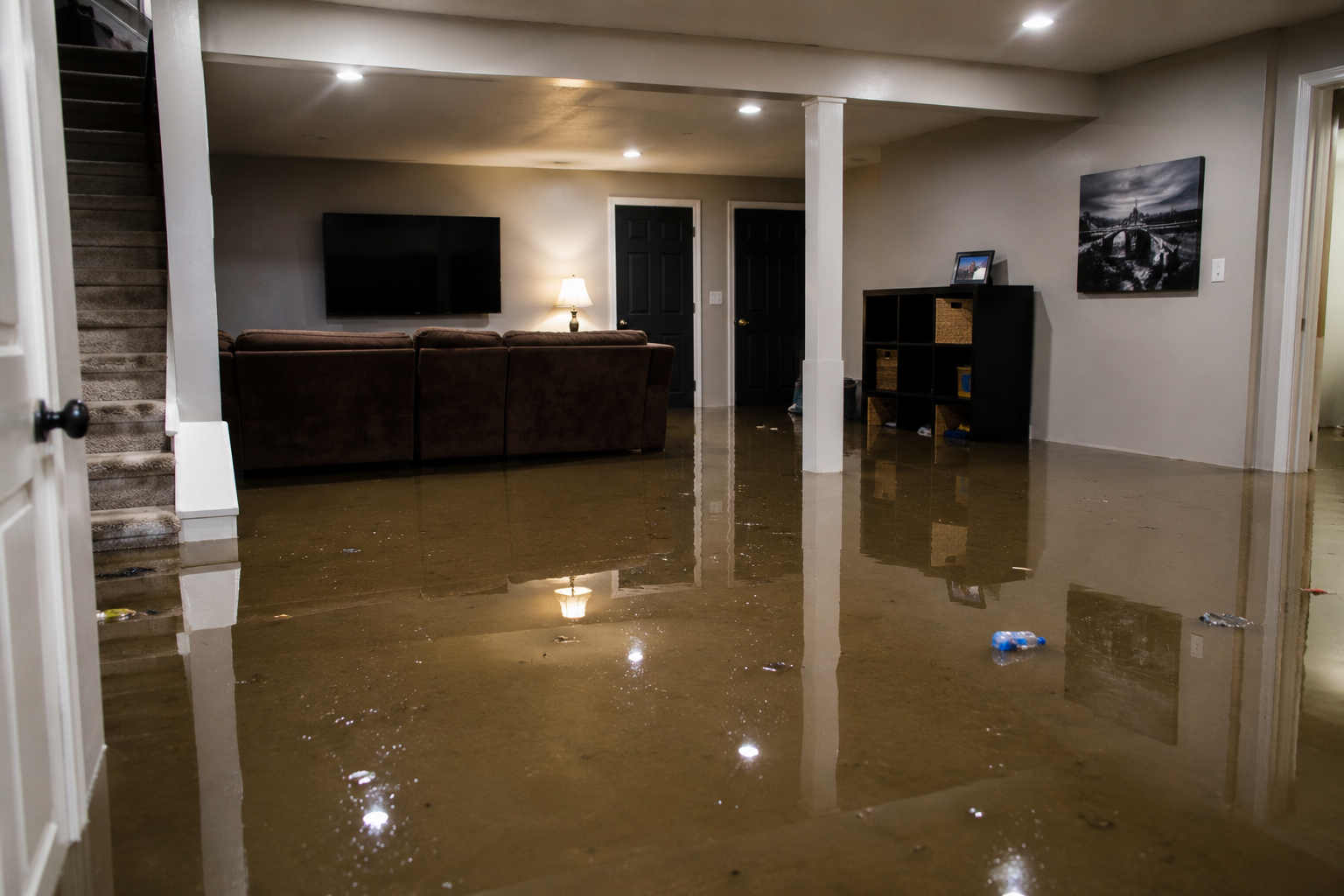
Gilbert gets hit hard during monsoon season. Between June and September, intense storms dump inches of rain in under an hour onto desert soil that cannot absorb it fast enough. Water sheets across streets, builds against foundations, and pushes through garage door gaps and weep screed openings in stucco homes. It happens fast. And when it does, most homeowners make the same few moves that end up costing them significantly more time and money than the flood itself.
These are the five most consistent mistakes we see after flood events in Gilbert.
Mistake 1: Using Household Fans to Dry the Space
This feels like the logical first move. The floor is wet, you have fans, you point them at the floor and run them overnight. The problem is that household fans do not have the capacity to reduce humidity in a flooded space — they circulate the air but do not remove moisture from it. In a Gilbert home in July, you are already dealing with elevated exterior humidity from monsoon conditions. Running fans without dehumidification pushes humid air across everything in the room, which accelerates mold growth on walls, baseboards, and any porous material the water reached.
What to do instead: Do not run household fans. Call a restoration company immediately so industrial-grade dehumidifiers can be deployed. Industrial equipment processes dramatically more cubic feet of air per minute than any household fan and actually removes moisture from the environment rather than just moving it around.
Mistake 2: Throwing Away Damaged Materials Before the Adjuster Sees Them
After a flood, the instinct is to get the damaged stuff out of the house as fast as possible. Soggy carpet, swollen drywall, ruined furniture — it all looks like garbage and it smells like it too. But your insurance claim depends on documented proof of what was damaged, at what extent, and in what condition. Flooring removed before an adjuster or restoration company measures and photographs it is flooring that may not get paid for in the claim.
This is especially relevant in Gilbert neighborhoods like Power Ranch and Seville where homes built in the 2000s have newer flooring and cabinets carrying significant replacement value. A homeowner who rips out flooring and base cabinets before documentation is on the record may receive far less than actual replacement cost. What to do instead: Take your own photos and video immediately after the flood. Call your insurance company before removing anything. See our flood cleanup page for how we handle documentation throughout the process.
Mistake 3: Assuming the Space Is Dry Because the Surface Feels Dry
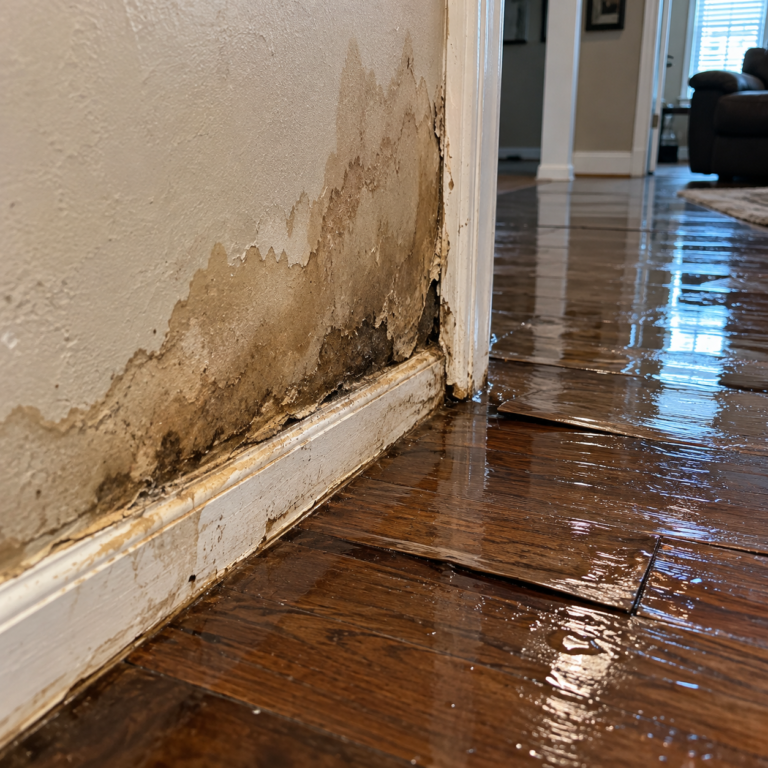
Concrete tile floors feel dry within hours of surface water being removed. But the materials below — the thinset mortar under tile, the drywall from the baseboard up, the insulation inside the wall cavity — hold moisture for days to weeks after the surface has dried. In Gilbert, those materials sit in an environment that cycles between hot and humid during monsoon season, which slows deep drying significantly.
We use thermal imaging and calibrated moisture meters to measure moisture levels inside materials, not just at the surface. A floor that feels dry may still read 35 percent moisture content in the drywall directly behind it. What to do instead: Never declare a space dry based on how it feels. Drying is not complete until materials reach established standards — typically below 15 percent for wood products.
Mistake 4: Waiting Days to Call the Insurance Company
This is the most common timing mistake. Homeowners clean up what they can, hope it dries on its own, and call their insurer three or four days later. By that point, mold may be present, documentation of the original damage is incomplete, and the insurance company has reason to question the extent of the claimed damage. Arizona policies typically include language requiring timely notice of loss.
Gilbert homeowners dealing with monsoon flooding also face a specific complication: standard homeowners policies cover sudden and accidental water damage from internal sources, but they do not cover surface flooding from an external storm event without a separate flood insurance policy. This distinction matters enormously in a monsoon event where water enters from outside. Per ready.gov, documenting damage immediately is one of the most important steps after any flood event. What to do instead: Call your insurance company within hours of discovering the damage. Document with photos and video before cleanup begins. Ask your adjuster specifically about flood exclusions if the water entered from outside the structure.
Mistake 5: Treating All Flood Water as Clean Water
Water damage is classified into three categories. Category 1 is clean water from supply lines or rain. Category 2 is gray water with contaminants. Category 3 is black water, which includes sewage, rising floodwater from outside, and any water that has been sitting long enough to support bacterial growth.
In Gilbert, monsoon flooding that enters from outside is Category 3 by definition. The water flows across streets, parking lots, landscaping, and whatever else it contacts before reaching your home. Wading through it in bare feet, touching contaminated flooring without gloves, or allowing children or pets into the area before professional extraction and disinfection is a genuine health risk. The same applies to sewage backups triggered when the municipal system gets overloaded during heavy rain events.
What to do instead: Treat all flood water that entered from outside or from a drain as potentially contaminated. Keep people and pets out of the affected area. See our emergency water damage page for how we handle Category 3 events.
Frequently Asked Questions
Request Emergency Flood Cleanup
We will call you back within minutes.