
Mold Remediation Gilbert AZ | Find It, Remove It, Keep It Gone
Professional mold testing, safe removal, and prevention treatment for Gilbert, AZ homes and businesses. IICRC certified technicians, full insurance documentation.
(928) 393-8922Get a Mold Assessment
Quick Answer
Mold remediation in Gilbert, AZ takes 1 to 5 days depending on the affected area. Small contained areas can be cleared in one day. Larger infestations covering multiple rooms or attic spaces may require 3 to 5 days of active work before post-remediation clearance testing confirms the area is safe.
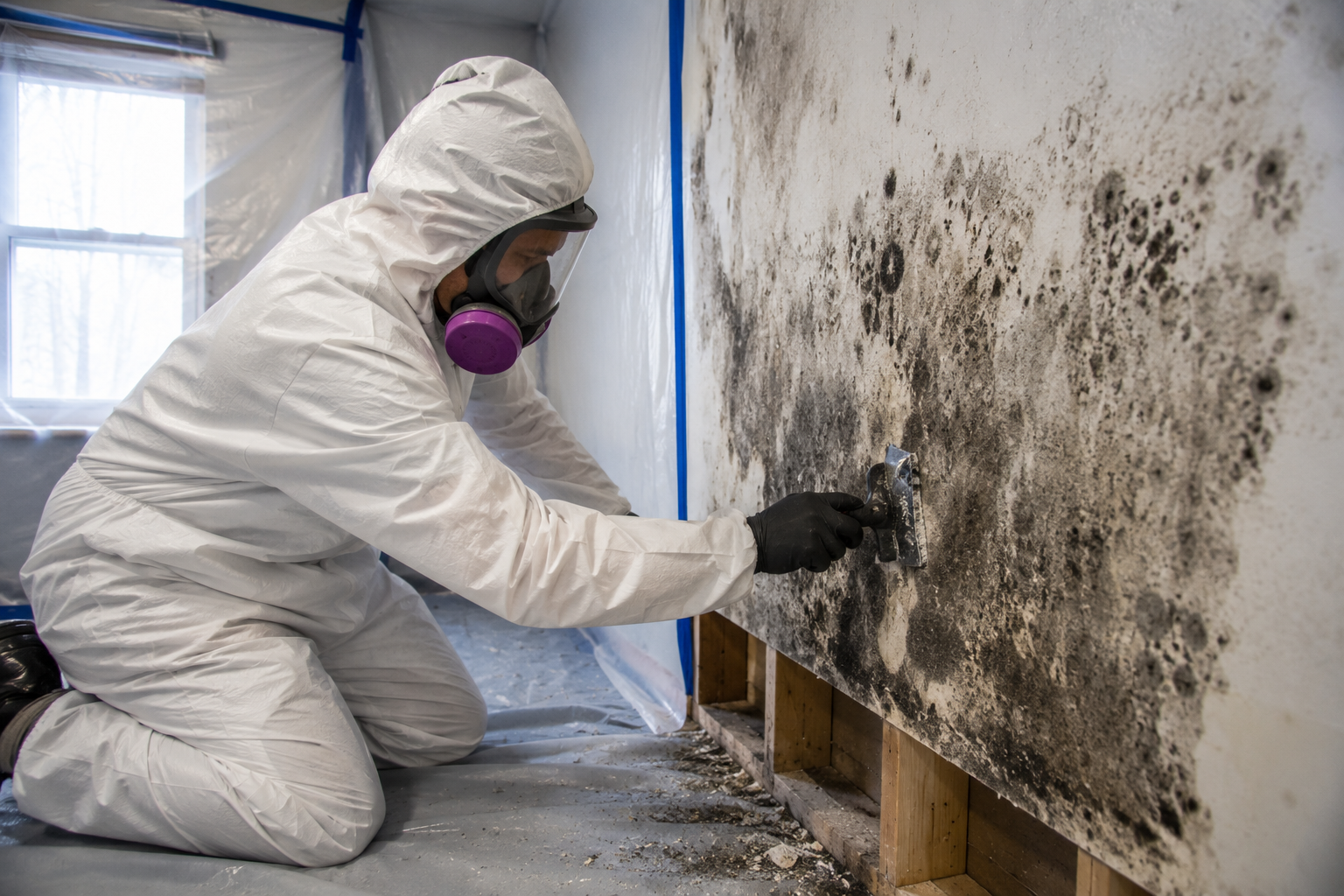
Mold remediation in Gilbert, Arizona involves finding every colony — visible and hidden — safely removing contaminated materials, treating structural surfaces with EPA-registered antimicrobial agents, and running clearance testing before the job is considered complete. We serve homeowners and property managers across Gilbert, Chandler, Mesa, Scottsdale, and the broader East Valley. Our goal is not just removal — it is a lasting result backed by documentation.
The dry desert climate of the Phoenix metro area creates a false sense of security about mold. People assume you need humidity for mold to grow. You do not. You need moisture — and moisture happens every time an AC drain line clogs, a supply line pinhole develops under a slab, or a refrigerator supply hose cracks at the back of the cabinet. Once moisture contacts drywall, insulation, or the paper facing on structural materials, Gilbert’s indoor temperatures do the rest.
The Mold Development Timeline
Mold is not slow. Here is what happens after water contacts a porous surface in a Gilbert home:
- 24 to 48 hours: Mold spores already present in the air begin to germinate on wet drywall, insulation, and wood. Germination does not require high humidity — surface moisture is enough.
- 3 to 12 days: Active mold colonies form. You may begin to notice a musty smell before you see anything.
- 12 to 21 days: Colonies spread through wall cavities and can reach attic insulation if the moisture source is in an interior wall.
- After 21 days: Widespread contamination that requires substantially more material removal and a larger remediation scope.
This is why calling us immediately after any water event matters. A job that is caught at 48 hours is a fraction of the cost and disruption of one caught three weeks later.
Why Gilbert’s Climate Accelerates Mold Risk
People outside Arizona do not understand how hard the AC works here. From April through October, most Gilbert homes run their air conditioning around the clock. Attic-mounted air handlers in the truss attics common to local construction operate in ambient temperatures that can reach 140 to 160 degrees. That extreme heat causes condensation on the cold supply and return lines, and when the condensate drain line gets even a partial clog from algae or mineral scale, the overflow starts immediately. The water runs down into ceiling drywall and sits there — often for days before the homeowner notices a stain.
Hard water compounds the problem. Gilbert’s water supply is among the harder in the Phoenix area, with mineral concentrations that leave scale inside pipes and fixtures. Supply line fittings, valve stems, and flexible connectors under sinks corrode faster here than in most parts of the country. A slow drip under a kitchen sink can go unnoticed for weeks — and that is all mold needs.
Health Risks of Mold Exposure
The EPA identifies mold as a significant indoor air quality concern for several health reasons. Mold exposure can cause respiratory irritation, coughing, nasal congestion, and eye irritation in otherwise healthy people. For children, elderly residents, and anyone with asthma or a compromised immune system, the risks are more serious and can include chronic respiratory illness. Read the EPA’s mold guidance at epa.gov/mold.
Do not attempt to clean mold colonies larger than 10 square feet on your own. Disturbing mold without proper containment releases spores into the air and spreads contamination to unaffected areas.
Why DIY Mold Removal Fails
Bleach kills surface mold on non-porous surfaces. It does not penetrate drywall, insulation, or wood, which means the root system — the mycelium — survives and regrows. DIY removal also lacks containment, so cleaning one wall without proper barriers often means spreading spores to adjacent rooms through HVAC air circulation. And without post-clearance testing, you have no confirmation the problem is actually gone.
Our water damage restoration service addresses the source at the same time as mold remediation so the problem does not come back.
Our Mold Remediation Process
Mold Inspection and Testing
We use moisture meters, thermal imaging, and air sampling to locate all affected areas, including hidden colonies behind walls and inside attic insulation.
Containment Setup
Plastic sheeting and negative air pressure machines isolate the work area and prevent spores from spreading to clean areas during removal.
Contaminated Material Removal
Drywall, insulation, and any other porous materials with active mold growth are carefully removed in sealed bags and properly disposed of.
HEPA Vacuuming and Surface Treatment
Structural surfaces are HEPA-vacuumed and treated with EPA-registered antimicrobial agents to eliminate remaining spores and inhibit regrowth.
Clearance Testing
Post-remediation air sampling and surface testing confirm spore counts have returned to normal levels before containment is removed.
Rebuild
We replace all removed drywall, insulation, and finish materials. One company handles everything so you are not managing multiple contractors.
Frequently Asked Questions
Request a Mold Assessment
We will call you back within minutes.